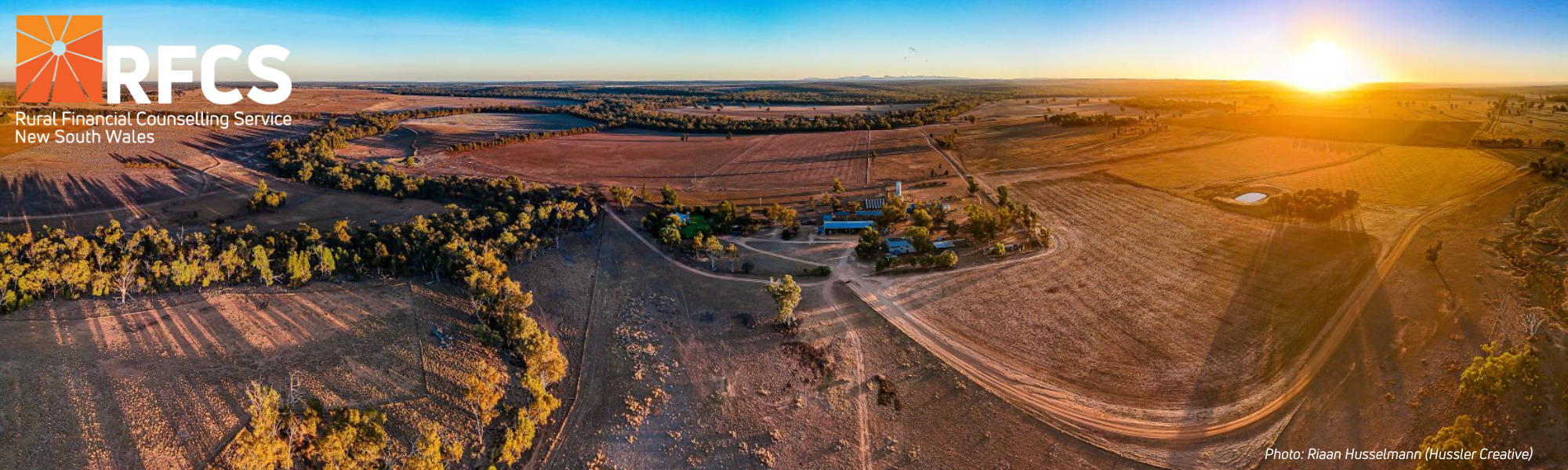
RFCS NSW May Newsletter
CEO update
Whether it be working one on one with our clients or engaging with stakeholders and groups, most of the talk is about rainfall, high cost of living/input costs and the cost/price squeeze, fertiliser and fuel prices and availability and biosecurity. These are constant challenges but have become more profound in recent times due to prolonged drought, persistent and stubborn inflation, and conflict in the Middle East. As you are aware, our Rural Financial Counselling program is there to help but it is important to know that this program is part of a broader suite of measures available to assist producers.
The Future Drought Fund (FDF) is the Australian Government's flagship program for building drought and climate resilience. Established in 2019 with an initial investment of $3.9 billion, the program has and will continue to deliver various initiatives to build capability and skills of individuals and groups, increase innovation and collaboration and implement practice change. RFCS NSW has and will continue to be involved in three initiatives under the FDF.
On 12 May RFCS NSW attended the 'Understanding Producer Pressures' roundtable discussion hosted by the Southern NSW Innovation Hub. The purpose of the roundtable was to bring banks, government agencies and service providers together to share observations and insights on the key issues for primary producers and potential actions and collaborations. Southern NSW Innovation Hub is one of eight hubs across the country funded by the FDF to conduct on-farm trials of new innovations and training farmers to use decision-support tools and other technologies. A list of projects for the hub can be found here.
Over the past couple of years, local governments have been working with stakeholders on development of Regional Drought Resilience Plans. RFCS NSW is listed as a delivery agency or partner in many of these plans. Over the coming years the actions will be delivered to strengthen drought preparedness and response across the region. You can access the plan for your area here.
In June, RFCS NSW will be delivering a series of Farm Smart workshops to farmers in partnership with NSW Farmers and NSW Department of Primary Industries and Regional Development. These workshops are designed to teach farmers how to assess their operating environment, conduct cost/benefit analysis on response options and develop a business plan to improve productivity and profitability. The workshops are funded under the FDF's Farm Business Resilience program. If you are interested in attending a workshop or would like more information about the program, the details can be found here.
Other government support initiatives RFCS NSW work with farmers on are:
- Access to a concessional loan via the Regional Investment Corporation and/or Rural Assistance Authority
- Access to income support via the Farm Household Allowance which is administered by Services Australia
- Assessing capacity to utilise the Farm Management Deposit scheme – an Australian government-backed tax management tool.
If any of these initiatives interest you, please utilise them.

Federal Budget, and what it means for farming businesses
With the 2026–27 Federal Budget handed down earlier this month, farming businesses are working through what the new settings mean for them. The backdrop is tough: conflict in the Middle East is pushing up fuel and fertiliser prices, inflation is still elevated, and drought is squeezing margins across regional NSW. The Budget features some relief measures – a permanent $20,000 instant asset write-off for small business and an instant tax deduction of up to $1000 – but also flags significant structural changes ahead.
The most consequential for farm businesses are the proposed changes to capital gains tax and discretionary trusts. From 1 July 2027, the 50% CGT discount will be replaced by inflation-adjusted indexation with a 30% minimum tax on realised gains. A 30% minimum tax on discretionary trust income is also proposed from 1 July 2028. Though primary production income is flagged as exempt, uncertainty remains over broader implications for farm trusts, diversified operations, and asset sales.
Importantly, none of this is law yet – legislation is yet to be passed by parliament – so now is the time to speak to your accountant and understand how the changes could affect your business structure. The BDO agribusiness breakdown is a useful starting point.
Farmers urged to seek help early as dry conditions bite
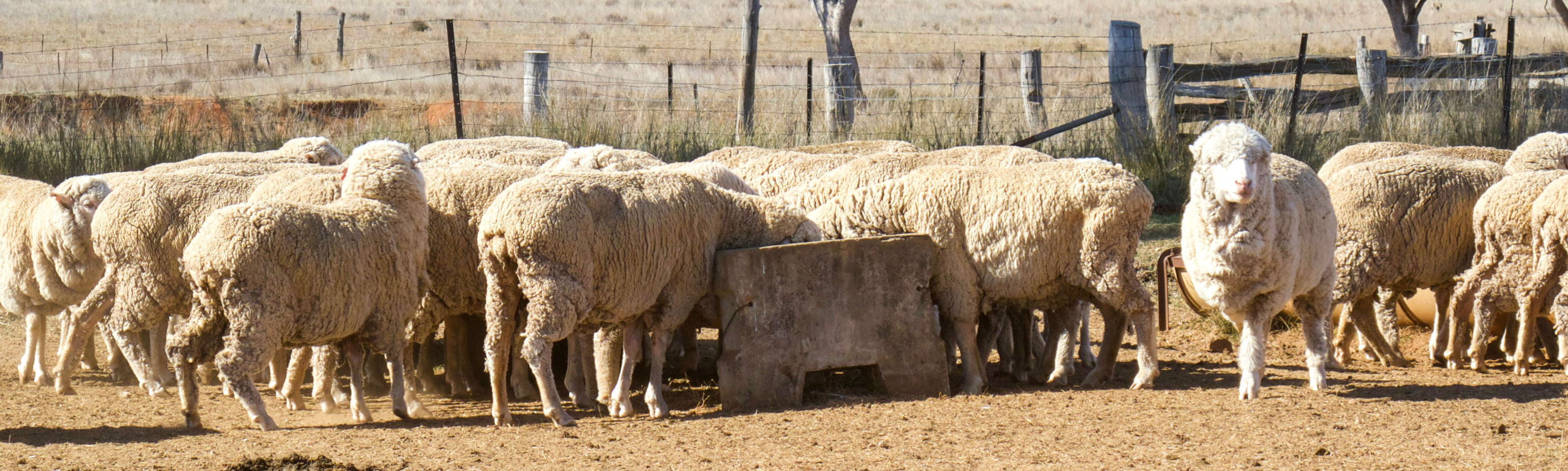
Rural Financial Counsellor Allison Davis is urging farmers across the Coonamble District to reach out early, before the pressure of prolonged dry conditions becomes unmanageable. Many producers in the region have been feeding stock for 12 months or more, and rising fuel costs are compounding already strained budgets. “Some have been feeding since February last year and we are seeing a lot of people destocking,” Allison says. “Fuel prices are compounding the issue.”
Allison is encouraging producers to complete a Primary Industries Natural Disaster Damage Assessment (PiNDDA) survey. The form allows farmers to record the impact conditions are having on their operation, including drought, and gets that information back to government. Lessons from previous droughts are prompting some producers to make the hard calls earlier this time. If conditions are bearing down on your business, your local RFC can help – reach out before it gets to crisis point on 1800 319 458 or www.rfcsnsw.org.au
Rising costs putting pressure on households
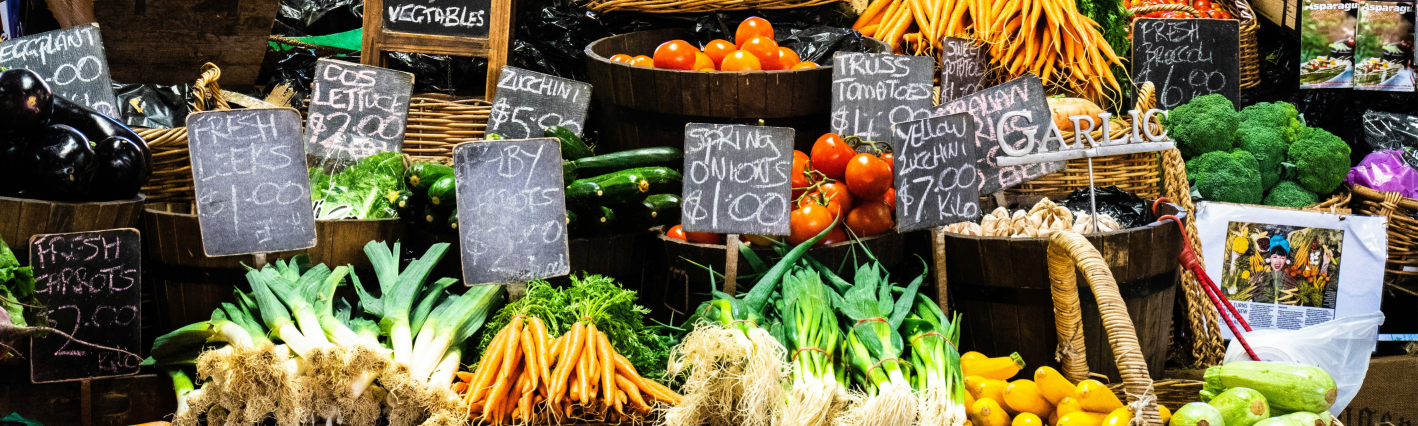
Everything's going up – fuel, groceries, utilities – and for many people in the Illawarra, it's becoming hard to keep up. Financial Counselling Service counsellor Glen Stewart spoke with the Illawarra Mercury about how rising costs are changing the way local people live day to day. And for many, it's becoming hard to keep up.
His message: if you're struggling, you're not alone, and help is closer than you might think.
Free, confidential financial counselling is available in the Illawarra – no judgment, just practical support to help make sense of your situation and find a way forward. Call 1800 570 655.
When pressure builds: support for farmers wellbeing
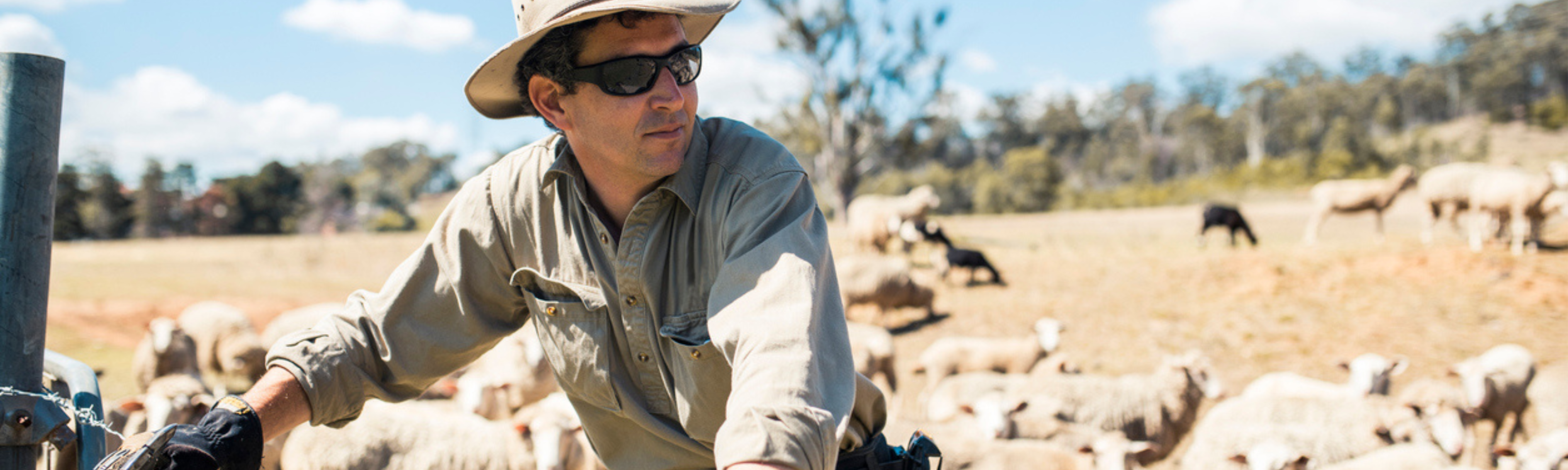
Drought, rising input costs, tight margins and unpredictable seasons – it's a lot to carry. And when it all lands at once, the weight on mental wellbeing can be just as real as the financial pressure. Farming often means long hours and isolation, and those conditions can quietly take a toll over time.
The Rural Adversity Mental Health Program (RAMHP) has put together practical resources to help farmers manage overwhelm and look after their mental health – worth saving and sharing with anyone who might need it. Grab a cuppa and watch this animation which shows how small actions built into our everyday can support good mental health and coping with adversity.
Developed jointly with the RFCS NSW, the ‘Real Cost of Financial Stress’ fact sheet also explores how financial pressure affects wellbeing and why getting professional help matters. It includes your local rural financial counsellor who can help you put a plan in place and feel more in control – free, confidential and independent advice.
Helpful resources for dry conditions
A range of tools and support services are also available to help you navigate the current season:
Drought tools and planning
- NSW DroughtHub — drought tools and resources
- Drought and Supplementary Feed Calculator
- A guide to confinement feeding sheep and cattle in NSW
- A-Z confinement feeding webinar — Part 1
- A-Z confinement feeding webinar — Part 2
- Free feed testing
- Free water quality testing
- Farming Forecaster — calculating dry matter
- Farm Tracker app — monitor seasonal conditions
- Beef and sheep feeding
Financial and wellbeing support
- NSW Rural Assistance Authority — financial assistance
- Rural Financial Counselling Service NSW
- Rural Adversity Mental Health Program (RAMHP)
Seasonal monitoring tools
- Combined Drought Indicator — interactive NSW map
- NSW DPIRD Farm Tracker mobile app
- Seasonal Conditions Information Portal

Research trial: mental wellbeing support for rural families
Rural and regional families are being invited to take part in a national research trial aimed at strengthening mental health support for parents living in the bush. Deakin University, in partnership with the National Centre for Farmer Health, is looking for families with children aged 0–12 years, with at least two parents, caregivers or parenting partners, to participate.
Families will receive one of two types of wellbeing support, delivered online or by phone. The findings will directly shape how mental health programs are designed and delivered for country families – so taking part is a way of helping yourself and others in a similar situation.
Free farm safety training and expanded $1000 rebate
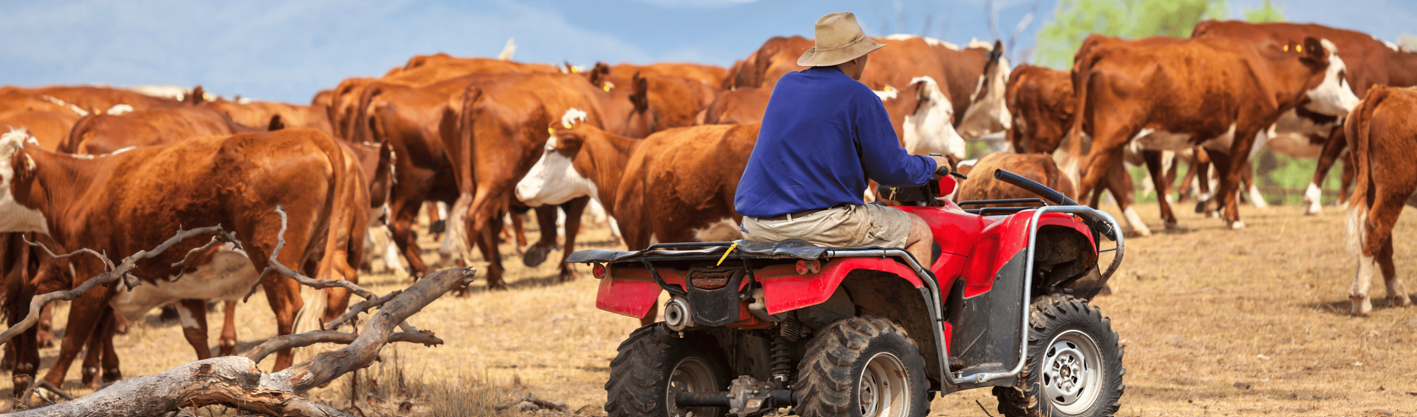
Farm safety is getting more attention from government, and there are two things worth knowing about. First, SafeWork NSW has launched a 12-month Farm Safety Training Program, with around 1,000 agriculture and farming workers to receive free baseline safety training, finishing with a certificate of completion. The program is a pilot, with SafeWork using the results to explore whether an industry-specific safety card for ag workers is feasible. Training commences later this year.
Second, the NSW Small Business Safety Rebate – worth $1,000 – has been expanded to cover more on-farm safety measures, including agricultural drones as a safer alternative to quad bikes and SSVs, and high-visibility power pole wraps and aerial line markers. Given that farm vehicles remain one of the leading causes of fatalities and serious injuries in NSW agriculture, it's a rebate worth checking your eligibility for.
New tools unlock farm research that farmers can access
Billions of dollars are spent on agricultural research every year, yet most of it never reaches the farmers it was designed for. AgMap is a new online platform aiming to fix that. Developed by researchers Dr Tom Lines and Dr Joe Marks, who saw grower-funded research languishing unused, AgMap groups thousands of research reports by region and uses AI to translate technical papers into plain language – giving producers direct access to what's relevant to them.
The tool also flags where research overlaps, helping avoid duplication and letting researchers build on what already exists. Worth a look.
New groundwater toolkit for producers
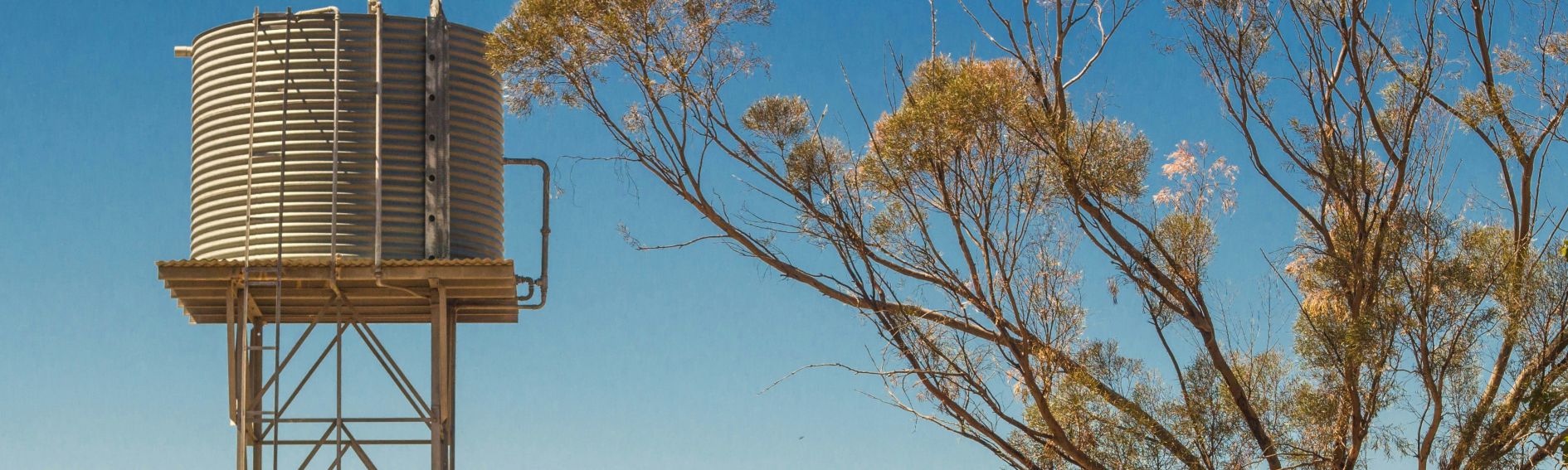
As dams dry up, knowing your groundwater options is increasingly important, and for producers in the Gilgandra and Warrumbungle Shires, a new tool has been developed specifically to help. Castlereagh Country has launched a Groundwater Access Toolkit: a single platform that consolidates licensing information, bore location guidance and groundwater system data into one accessible, locally relevant resource.
The toolkit came directly out of community feedback, which identified that the high cost of drilling new bores – with no guarantee of success – and the complexity of navigating government approvals were major barriers. Jointly funded by the Australian Government's Future Drought Fund and the NSW Government, the toolkit is designed to help landholders make more informed investment decisions as conditions tighten.

Virtual tool to help catch high risk weeds early
A new online reference collection developed by the Botanic Gardens of Sydney and NSW DPIRD is giving landholders, farmers, councils and bush carers a practical tool to help identify the state's most dangerous invasive plants before they get a foothold. The Virtual Reference Collection of Priority Weeds contains detailed images of 29 plants listed as Prohibited Matter – the highest biosecurity risk category – and can be accessed from any device, whether you're in the paddock, the office or the car.
Each specimen can be magnified online to reveal the botanical detail needed for confident identification. As weed botanist Patricia Lu-Irving says, early detection is everything.
40 Years, 40 Properties: photo campaign
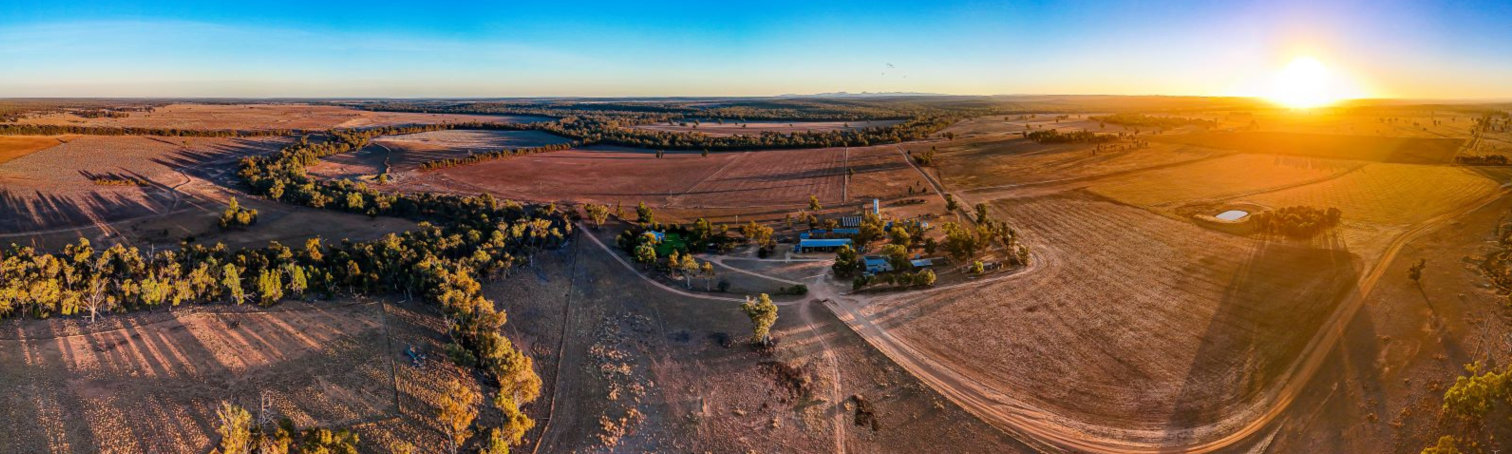
This stunning aerial shot of a Gilgandra property in western NSW, captured by photographer Riaan Husselmann of Hussler Creative, stopped us in our tracks. It's a reminder of just how extraordinary the country our clients call home really is – and it's given us an idea.
RFCS NSW turns 40 this year. Four decades alongside farming families through the toughest of seasons, and the best of them. To mark the milestone, we're launching 40 Years, 40 Properties, and we want your photos. A landscape, a working shot, an animal, a cracking sunset, a hard day or just a good one. Whatever says this is my patch. Submit your best shot for the chance to be featured across our socials and newsletter, with followers voting from a shortlist of finalists to find their favourites. Tag us using #40yearsoffarmlife and #mypatch40 or email

Coota offsite – learning, growing, backing our farmers
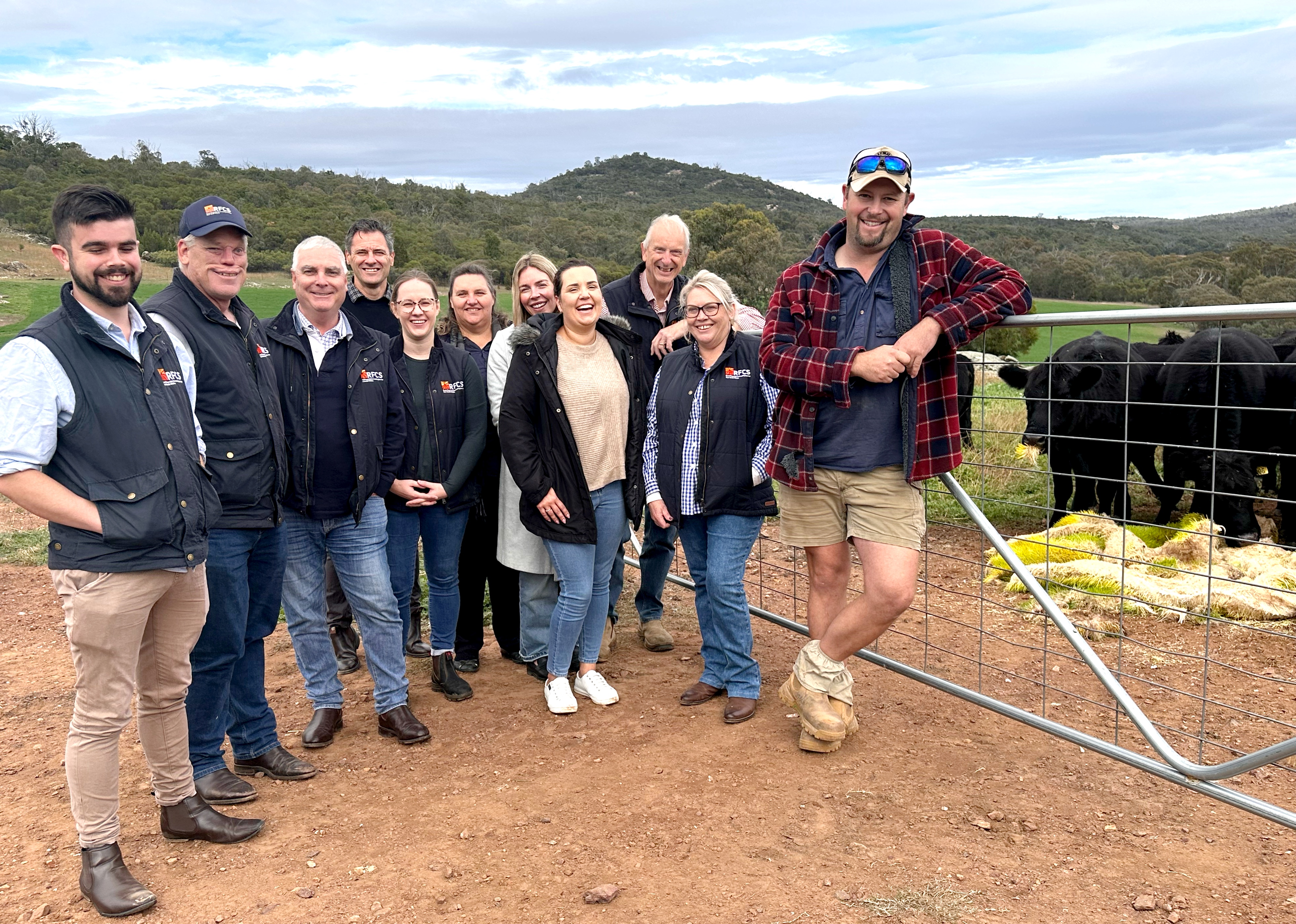
The RFCS NSW southern team recently came together in Cootamundra for their annual offsite – two days of professional development designed to sharpen the skills that help farmers thrive.
Sessions covered BRT ratios, farm debt mediation, and a valuable briefing from Services Australia on support available to farm families. A standout moment was a visit to a local property to see a hydroponic cattle feeding system in action – a great example of the kind of on-farm innovation and diversification our counsellors can help clients explore. Thanks to RFCS supporters Ben and Marine Morton for opening the gates!
It's all part of what makes the difference for farmers across southern and central NSW. In the last financial year alone, RFCS NSW helped save farmers millions through our range of free services, with the final figure coming soon, so watch this space. As always, every bit of it delivered free, confidentially and independently.
Four decades in, and our commitment to farmers is stronger than ever – 2026 marks 40 years of the Rural Financial Counselling Service, and we couldn't be prouder.
Narromine and Trundle drought events
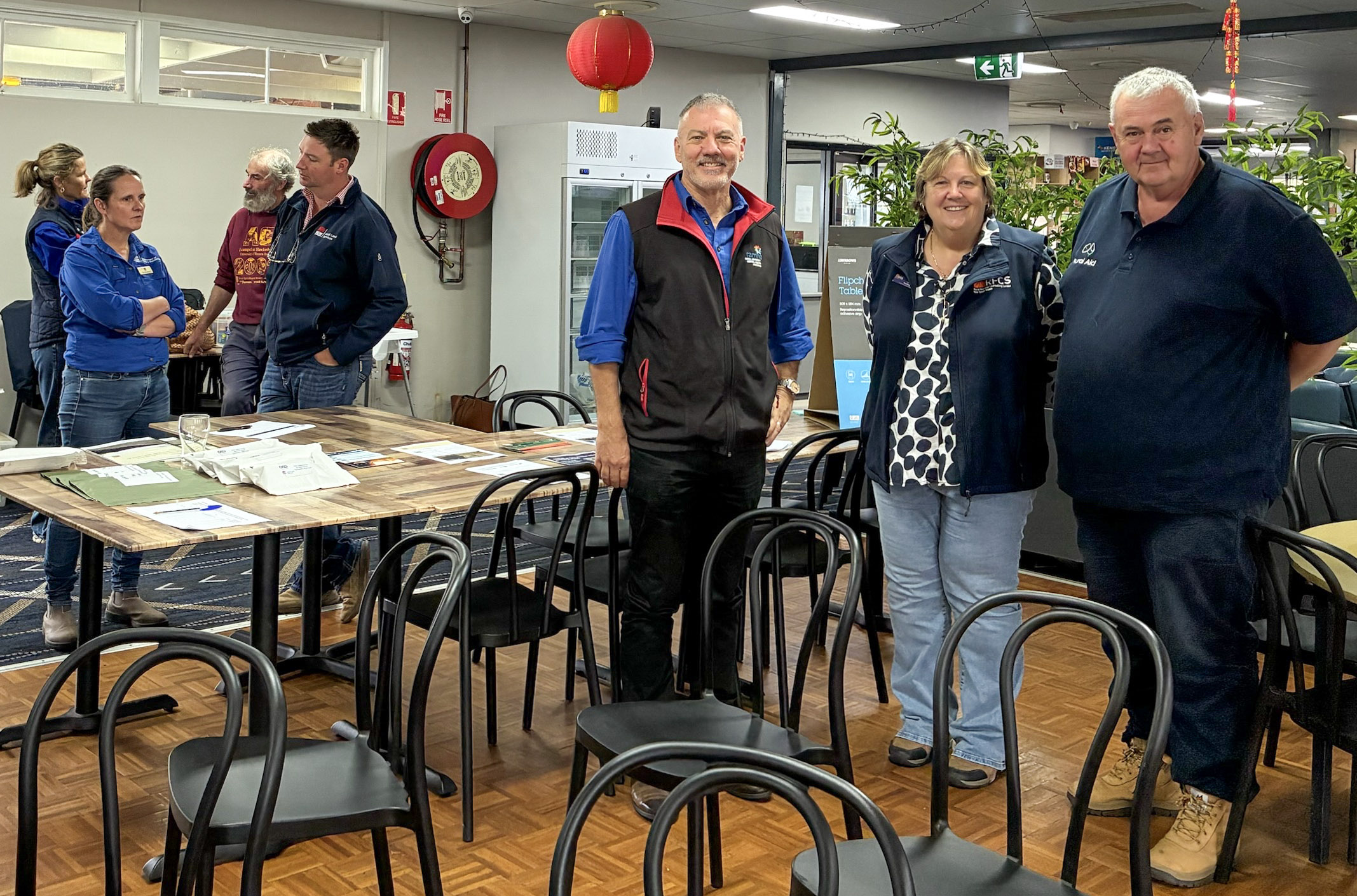
With drought on the ground in the Narromine region, around 60–70 farmers, business owners and council representatives gathered in late April – not to wait for help, but to plan ahead.
The aim of the community workshop was to co-design a local drought resilience plan on behalf of Narromine and Dubbo councils. Working in table groups, attendees identified key gaps including no agreed trigger framework for when support kicks in, no single point of contact before people hit crisis, poor awareness of support services, and under-represented voices from Aboriginal communities, migrants, youth and small business. Ideas ranged from a community resource flyer to a dedicated Council drought assistance officer. RFC Sue Bunyan attended on behalf of RFCS NSW.
Sue was also at the Central West LLS Trundle Seasonal Conditions Drop-In, a practical session covering livestock management, confinement feeding and financial and wellbeing support. A welcome bright spot: several attending farmers had just received some decent falls of rain and were feeling cautiously optimistic.
Western NSW voices reach decision-makers
RFCS NSW counsellors Sue Bunyan, Anna Shearman and Sophie Ray joined a delegation of western NSW service providers recently when the NSW Council of Social Service (NCOSS) travelled to Dubbo and Bourke to hear firsthand about conditions on the ground.
The visit brought together organisations including the Central West Family Support Services, Maranguka Community Hub, CatholicCare Wilcannia-Forbes, BaptistCare Hope Street Dubbo and Brewarrina Shire Council, with NCOSS CEO Cara Varian hearing directly about the region's key challenges including fuel security and shrinking local services. The shift of services away from rural towns to major centres was a central theme.
NCOSS will take these concerns back to decision makers and advocate for change – a valuable channel for a region that can often feel overlooked.
Red dirt and river country: RFCs at local field days
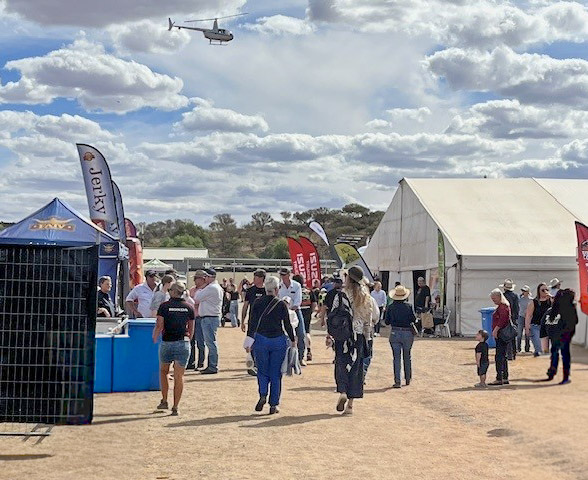
For a region as vast as Far West NSW, Agfair Broken Hill is one of the few chances for people to come together, to do business, share knowledge and simply catch up face-to-face.
The biennial event earlier this month drew around 6,500 attendees and 200 exhibitors this year, with recent rains adding to the good spirits despite the dust. RFC Steve Morris represented RFCS NSW alongside Western Landcare and RAMHP in the Woolshed Pavilion, raising the service's profile and strengthening connections with finance, legal and specialist organisations.
Some of the most valuable conversations centred on mental health. Royal Flying Doctor Service Ambassador Brendan Cullen spoke openly about his own battle with depression and his work as a champion of the RFDS ‘We've Got Your Back’ mental health initiative which provides face-to-face wellbeing support for landholders across the Far West.
RFC Graeme Witte also attended the Mildura Field Days this month, raising awareness of RFCS NSW services to support producers across the far western Riverina.
The Unbreakable Farmer message to Riverina farmers
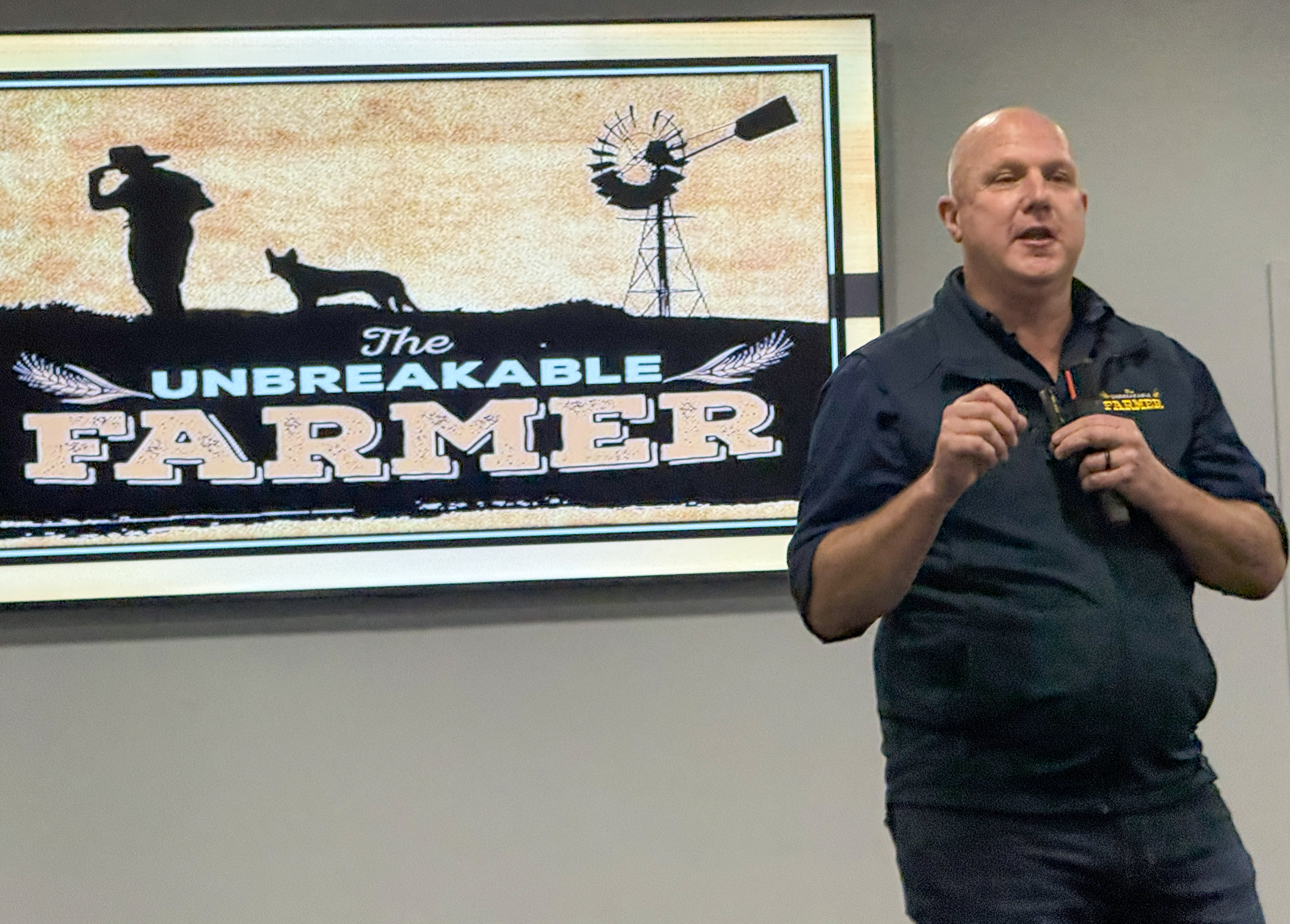
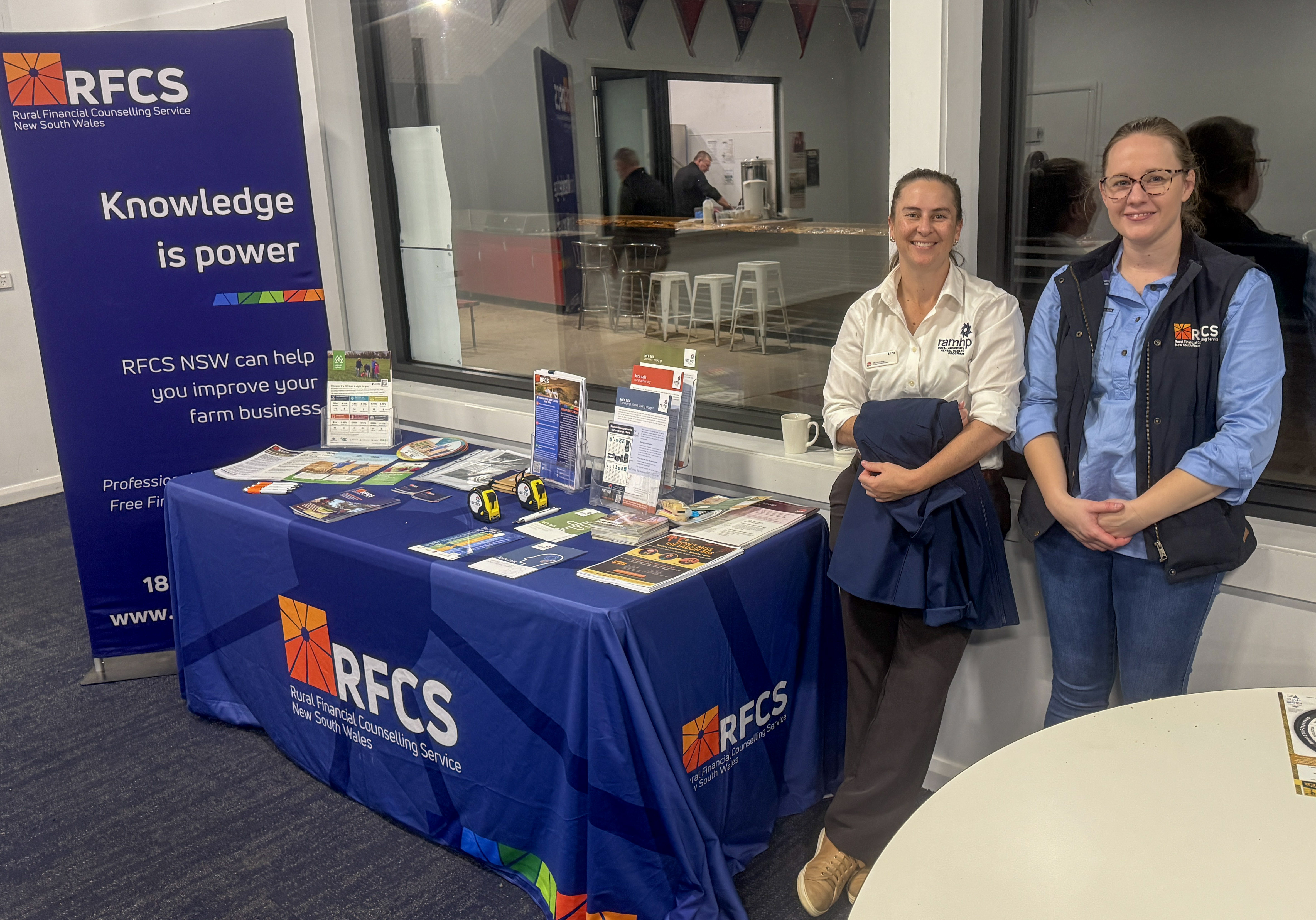
Warren Davies has lost a farm and fought his way back. That lived experience is exactly why his Unbreakable Farmer sessions resonate with farming audiences. RFCs Scott Boyle and Rhianna Cameron attended Warren's events at Lockhart and Wagga Wagga (including the saleyards), with the audience drawn from farmers, ag bank staff, accountants and insurers. The sessions struck a chord: several attendees said they'd seen Warren before and come back for more. His mix of honesty, humour and practical tools makes a difficult subject more approachable, and he gave a strong shoutout to RFCS NSW and RAMHP as local points of contact.
The following week, RFC Justin Luckel attended the free C.A.S.E (Community Action 4 Suicide Elimination) Blokes Only mental wellbeing night at Hay Services Club – another event where Warren shared the stage, this time alongside Mary O'Brien from Are You Bogged Mate? With the season doing what it's been doing, the chance for Hay's farming community to sit down, have a yarn and talk about the stuff that actually matters was, by all accounts, well overdue.
Livestock feeding tips for Cabonne producers
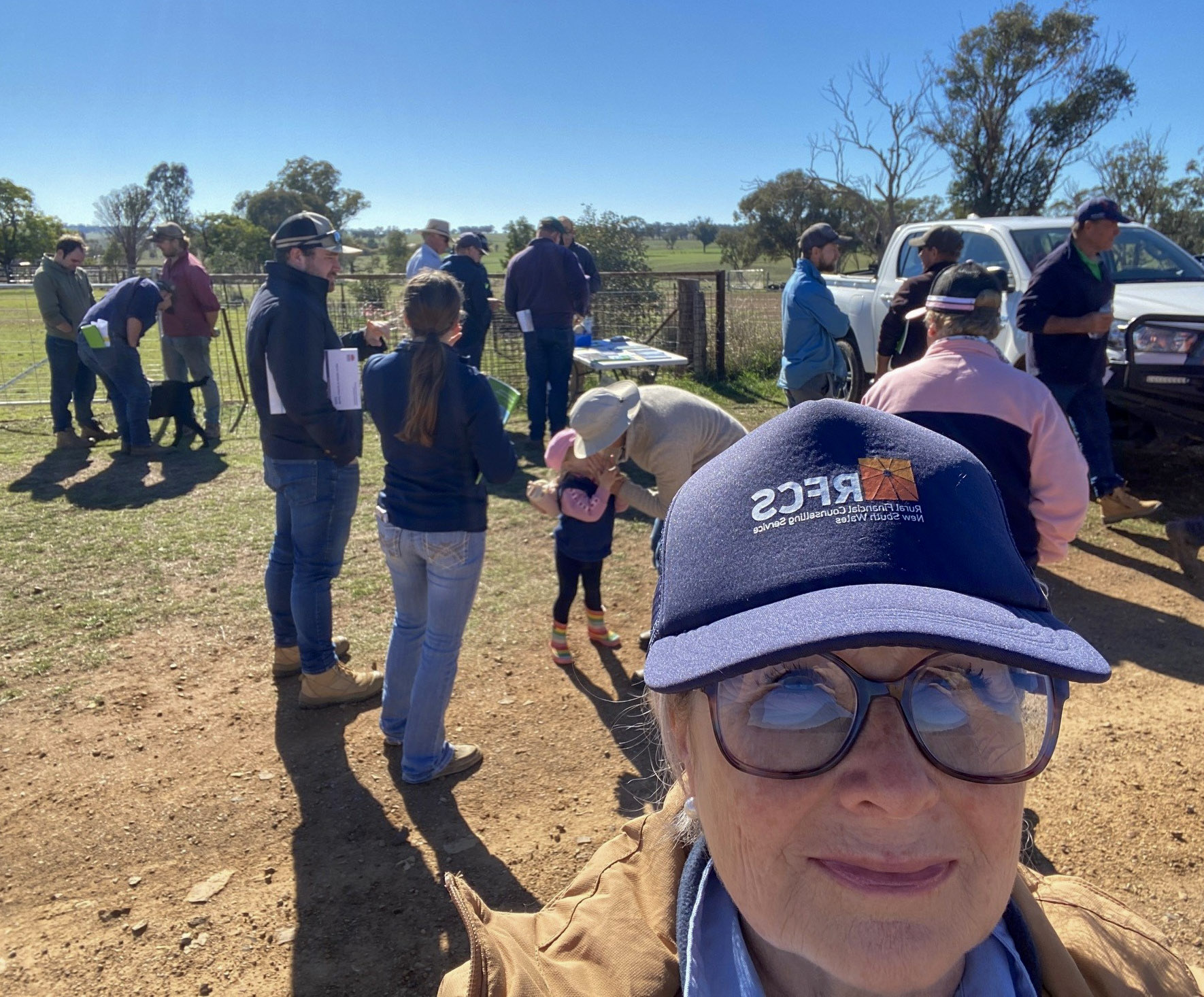
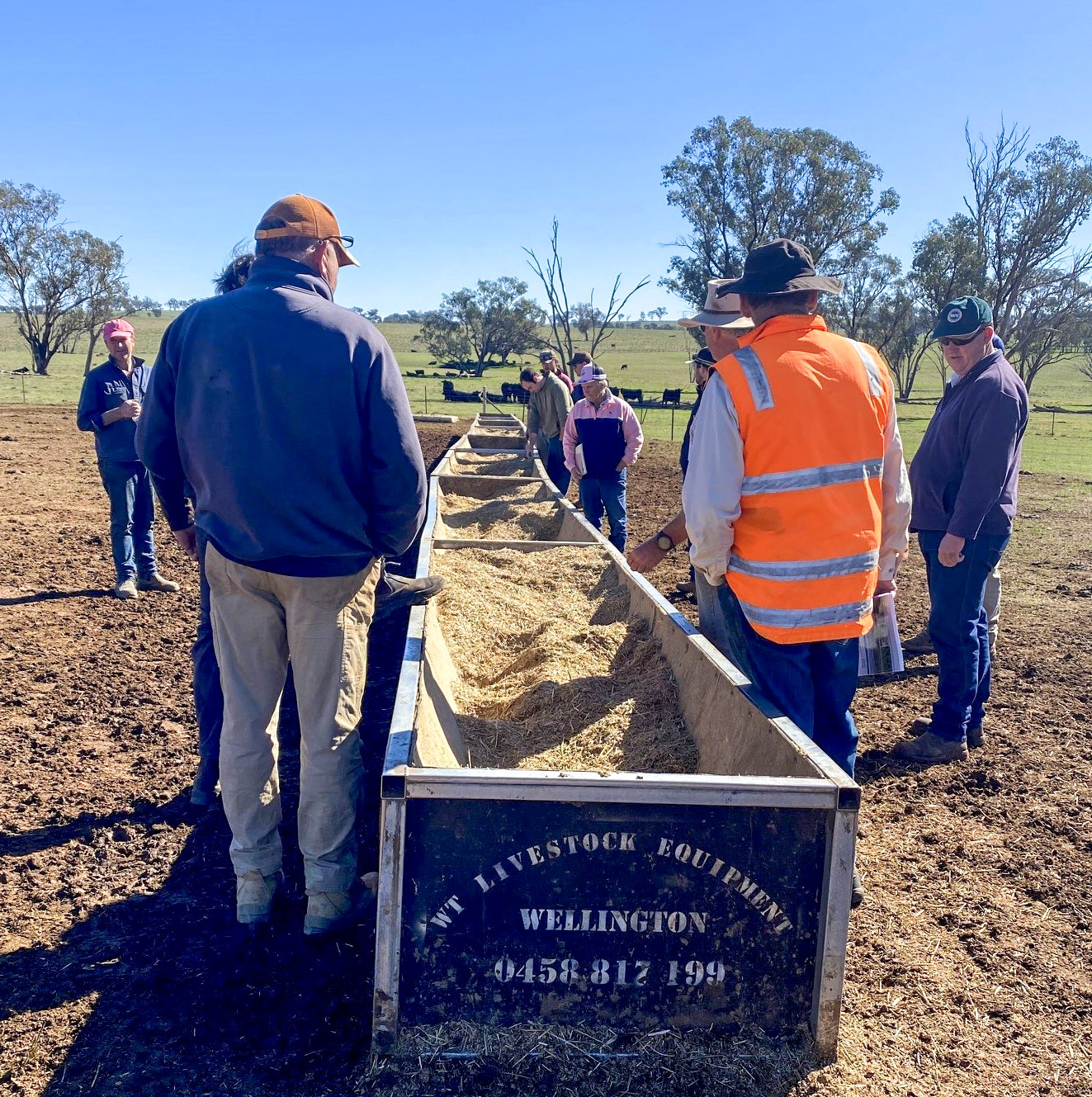
RFC Danielle Davenport joined Central West LLS at Larras Lee near Molong for an on-farm session on livestock feeding in tough conditions, with local ag stores and vets also in attendance. Hosts walked producers through their own confinement feeding set-up for both sheep and cattle, sharing what had worked, what hadn't, and what they'd do differently. Given that most of those attending had been feeding stock for at least 12 months, the discussion was frank and experience-driven.
Key topics included high protein supplements, scenario planning for confined feeding and destocking decisions. Greatest areas of concern were regarding supplements – which ones are being used, when they should be applied, what to watch for in cases of over-supplementation, and how to safely integrate animals back into the field. Also important was the impact of supplementation practices on wool and meat production, including overall yield and quality.
Speakers Phil Craney and Brett Littler (both Senior Land Services Officers with DPI) encouraged open conversation and didn't rush the room, and it showed. Danielle reports the peer-to-peer exchange between farmers was, by many accounts, as valuable as the formal presentations.
Oyster farmers on the radar at Merimbula conference
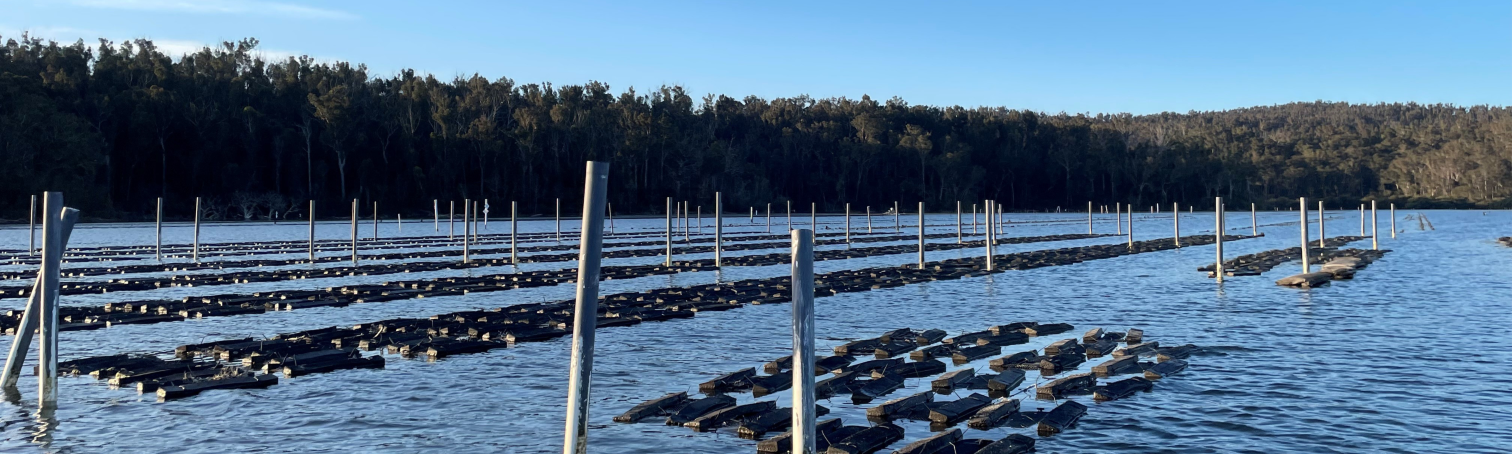
RFCS NSW counsellors Bonnie Hayes and Nikki Fletcher were at the NSW Oyster Conference in Merimbula this week, connecting with oyster farmers and industry representatives across the sector. As well as making the case for how RFCS NSW can support lease businesses, they were promoting two upcoming Farm Smart workshops designed specifically for oyster farmers – in Narooma on 18 June and Merimbula on 25 June, delivered in partnership with NSW Farmers.
Unlike general business training, these workshops reflect the real-world pressures of running an oyster lease: environmental risk, regulatory requirements and commercial viability. Participants leave with a farm business plan in progress, a completed Farm Business Checklist and practical next steps. Delivered as part of the Farm Business Resilience Program, funded jointly by the Australian Government's Future Drought Fund and the NSW Government.
Coming up: connect with us in your region
Your local Rural Financial Counsellors will be out and about across southern and central NSW over the coming weeks. Whether you're looking for practical on-farm support or just want to have a conversation about your business, come and find us.
3 June: Central Tablelands LLS Beef Muster, Blayney. A free gathering for the region's beef community focused on production performance, market positioning and practical on-farm decision making. Register here.
3 and 30 June: Farm Smart workshops in Trangie (3 June), Griffith and Orange (30 June). Free evening sessions covering farm business planning, risk, financial management and bank readiness, delivered by RFCS NSW and NSW Farmers. Register here.
4 June: The Dry Season Jigsaw, Tallimba. A practical morning at Kitto's Shearing Shed, Cairn Mount, hosted by Riverina LLS. Hear from local farmers Daryll Kitto and family on confinement feeding and pasture management, with expert speakers covering drought preparedness, animal health and wellbeing. RFC Daniel Brown will be there. Register here.
17 June: Just A Farmer film screening at Ardlethan Showground. A free screening of the Australian documentary exploring rural life, resilience and mental health, followed by guest speakers and a community Q&A. RFC Rhianna Cameron attending. Book tickets.

2 June: NSW DPI Agtech Fundamentals Workshop – Far West NSW
Could technology be working harder on your farm? The NSW DPI Agtech Fundamentals Workshop is a practical, no-nonsense introduction for farmers wanting to understand what agtech and connectivity solutions can actually deliver for their productivity and profitability, without the sales pitch. You'll leave knowing the right questions to ask, how to avoid costly tech that doesn't fit your operation, and what your next steps are. Coming to Far West NSW in early June. Free to attend. Register here.
3 June: Farms in Focus Insights Webinar – Online
What do farmers see as the biggest challenges and opportunities ahead? CommBank Agribusiness and Harvard University's Professor Michael Hiscox share findings from the inaugural Farms in Focus survey – drawn from 500+ Australian farmers – covering farm viability risks, how producers are adapting, and where confidence lies for the future. Online, Wednesday 3 June, 2–3pm AEST. Free. Register here.
4 June: RAMHP Women's Wellbeing Workshop – Urana
Rural women juggle a lot – the farm, the family, the community. These free Women's Wellbeing Workshops, delivered by the Rural Adversity Mental Health Program (RAMHP) and the Rural Women's Network, offer practical tools, shared experience and a supportive space to reconnect and recharge. Next session: Urana, 4 June. Register here.
5 June: Are You On Channel Mate? – Dunedoo
A good feed, a drink on arrival, and a room full of your people — sometimes that's exactly what's needed. ‘Are You On Channel Mate?’ is a free evening at Dunedoo Sports Club on Friday 5 June, hosted by Delta Agribusiness. Guest speakers include storyteller Murray Hartin and rugby league identity Brian Johnston. With drought still biting and plenty of other pressures on the land, this is an evening to reconnect and recharge. RSVP ASAP.
5 June: AWI Feed Budgeting Masterclass – Gundagai
When conditions tighten, a good feed budget is one of your sharpest tools. AWI Extension NSW's Feed Budgeting Masterclass takes a practical approach to using feed budgets to drive flock performance, covering nutrition planning, feed testing and decision-making under dry conditions. Free to attend, with lunch, afternoon tea and resources provided. A free feed test is also included on the day. Register here.
9 June: Trees, Tech and Trials – Memagong
A Local Land Services field day at Memagong covering the intersection of trees, technology and on-farm trials – practical insights for mixed and grazing producers in the southern tablelands. A good opportunity to see what's working in the paddock and hear from researchers and producers firsthand. Register here.
10–11 June: Riverina LLS Tags to Table – Binya and Young
How do your cattle track from paddock to plate, and what does that mean for your business? Riverina LLS's Tags to Table events explore the full livestock supply chain, helping producers understand what processors and retailers are looking for and how to position their enterprise to capture more value. Two sessions: Binya (10 June) and Young (11 June). Free to attend.
10–11 June: Farm Office Systems and Xero Workshop – Hanwood and Narrandera
Is the farm office keeping up with the farm? This LLS practical workshop covers simple farm office systems and Xero workflows to keep your bookkeeping current and support confident decision-making. Topics include invoicing, reconciliation, managing receipts and paper records, cloud-based storage and using Xero to track fuel, grain and livestock inventory. Sessions at Griffith (10 June) and Narrandera (11 June). Register here.
11 June (online) – 24 June (Tooleybuc): GRDC Farm Business Update – Aligning Machinery Cost Structure with Income Volatility
With tight margins and rising input costs reshaping cropping decisions, this GRDC Farm Business Update tackles one of the harder questions: how does your machinery investment, labour use and cost per hectare actually stack up against real income volatility? Farm Business Consultant Peter Newman from Planfarm guides producers through pressure-testing their cost structure and building a system where costs flex with performance rather than amplifying seasonal risk. Online 11 June; also at Tooleybuc 24 June.
18 June: Stronger Farms Workshop – Goulburn
Seasons are unpredictable, markets are tight and costs aren't slowing down – this free half-day workshop is built for livestock producers who want practical tools to stay ahead of the pressure. You'll work through gross margins, cash flow and decision trigger points with experts who know what livestock businesses are facing right now. Goulburn Mercure, Thursday 18 June. Delivered as part of the Farm Business Resilience Program, jointly funded by the Australian Government's Future Drought Fund and the NSW Government. Register here. All upcoming FBRP events: events.humanitix.com/host/nswfbrp
23 June (Boorowa) – 24 June (Yass): Vertebrate Pesticide Induction Training
Want to use restricted pesticides like 1080, Pindone or PAPP to control feral pigs, rabbits, wild dogs or foxes on your property? In NSW you'll need to be certified first. This introductory LLS course covers what you need to know to become accredited, and an upgraded online version now provides five years of certification. In-person sessions at Boorowa (23 June) and Yass (24 June), or complete the course online at your own pace.
27–29 July: Australian Women in Agriculture Conference – Orange
Under the theme ‘Grounded Voices – National Impact’, the Australian Women in Agriculture (AWiA) 2026 National Conference comes to Orange this July, bringing together women from across the sector for connection, leadership development and honest industry conversations. The program includes keynote speakers, policy and innovation panels, governance workshops, an Emerging Leaders stream and farm tours across the region. AWiA members $650, non-members $750, students $550. Tickets are open now.
27–29 October: NSW Landcare Conference and Awards – Corowa
Corowa hosts the 2026 NSW Landcare and Local Land Services Conference in October, celebrating community-led land stewardship and the people doing the work on the ground. Register here. Nominations are also open now for the NSW Landcare Awards – if you know someone making a real difference across land, water or community, put their name forward.

EOI open now: Explore Carbon Opportunities – Grain and Mixed Farming Businesses
Riverine Plains is helping grain and mixed farming businesses across southern NSW explore carbon opportunities that actually fit the farm – covering soil carbon, native vegetation, grazing management and lower-emissions systems, while keeping an eye on whole-of-business productivity and profitability. Delivered under the NSW Government's Low Carbon Landscapes program, 18 farming businesses are sought for tailored, farm-specific scoping. EOIs are open now.
Grower funding: Hort Connections – Attendance Funding for Fruit and Vegetable Growers
Are you a levy-paying Australian fruit and vegetable grower planning to attend Hort Connections in Adelaide this year? Reimbursement of up to $1250 (interstate growers) or $750 (state growers) is available to help cover attendance, flights and accommodation. Funding is limited and allocated first come, first served. Apply here.
Closes 23 June: Future Drought Fund Communities Program – Round 2
Grants are available for locally based not-for-profit organisations looking to strengthen social resilience in agriculture-dependent communities. Small Network Grants of up to $50,000 are available for simple or one-off activities, while Regional Drought Resilience Plan (RDRP) Social Outcome Grants support larger projects building social capital and community connectedness. Round 2 open now and closes 23 June 2026.
Closes 31 July: Inland Rail Community Grants Program
Grants of $1,000–$4,000 are available for individuals and organisations along the Inland Rail route for community-initiated projects, events or activities that contribute to local prosperity, wellbeing and sustainability. Applications close 31 July 2026. Apply here.
Applications open: AgriFutures Rural Futures Advisory Panel
AgriFutures Australia is recruiting up to five experienced individuals to join its newly established Rural Futures Advisory Panel, supporting long-term research and strategic thinking about the future of rural Australia. Panel members will provide advice on research methodology, evidence gaps, emerging priorities and stakeholder engagement across the program. If you have relevant expertise and want to shape how national agricultural research is directed, applications are open now.
Always open: Industry Growth Program – Startups and SMEs
The Australian Government's Industry Growth Program offers advisory services for startups and small to medium enterprises working on innovative commercialisation or growth projects aligned with the National Reconstruction Fund's priority areas. Applications are always open – worth a look if your agribusiness has a growth or commercialisation project in mind.
Rural Financial Counselling Service Southern Region | ABN: 57 649 413 936
256 Kincaid Street, Wagga Wagga, NSW, 2650
Facebook | LinkedIn | Website |