
RFCS NSW February Newsletter
CEO update
Welcome to the first edition of our 2026 newsletter.
The team has hit the ground running since returning from leave on 5 January. We've completed our monthly, quarterly, and six-monthly program reports for the state and federal governments. A new financial counselling program with Grand Pacific Health has been approved. Various operational projects like reviewing of our asset register has also been delivered.
Unfortunately, we have seen the drought spread across our service region. Over the past 12–18 months the drought affected areas have been mainly in the southern part of the state, for example Snowy Valleys. As time has gone on it has spread upwards to now cover most of the Central West and the Far West and Orana. It appears only the coastal side of the Capital region and parts of Cobar and Carrathool have been spared. This is forecast to change over the next three months as the drought continues to march on to cover our entire service region – central and southern NSW.
On Monday 16 February the NSW Agriculture Minister responded to this situation by announcing a drought support package. It includes further support for pest control, new and changed drought loans, extension services and increased funding for the RFCS program. We welcome the announcement and will ensure the extra resources will be deployed where demand is greatest and impact can be maximised. For further detail on the announcement please refer to: www.nsw.gov.au/ministerial-releases/drought-support-increased-for-farmers-across-affected-areas
The Australian Government also made a significant announcement back on 11 December. It released its response to the Review of the Operation of the Regional Investment Corporation Act 2018 (RIC Act) and announced a new Drought Hardship Loan for drought affected farmers. To access this loan a farmer will have been affected by drought for at least 24 months and expect to be impacted for another season. They can borrow up to $250,000 over a five-year period to deal with the short-term operating costs incurred from the drought. The Regional Investment Corporation are currently working on the loan's guidelines and processes with applications expected to open in the first half of 2026.
The theme for our first edition this year is risk management. We thought this suitable given the seasonal conditions. There are many risks on a farm requiring some form of mitigation or treatment action. Drought is an obvious one. New or expanded water catchments, irrigation efficiency upgrades, fodder storage facilities, drought tolerant crop varieties, rotational grazing, and other measures all need to be considered via cost/benefit analysis. This can be done via development of a risk management plan with one of our Rural Financial Counsellors.
Best wishes to you all for 2026. We are all praying for this drought to break.
Craig Hough
Chief Executive Officer

Risk Management in farming: Turning uncertainty into opportunity
In farming, risk is part of everyday decision-making. From weather patterns to market prices, uncertainty is constant however risk itself isn't negative. When understood and managed well, it can create opportunity as much as it presents challenges.
Most farm businesses face five key areas of risk:
- Production risk – from drought, frost, pests, disease, or machinery breakdown.
- Personal and operational risk – including injury, illness, family changes, or workplace incidents.
- Market risk – such as price fluctuations, shifting demand, or loss of market access.
- Financial and legal risk – including cash flow pressure, rising input costs, interest rate changes, or compliance issues.
- Succession risk – where a lack of clear planning can threaten both family harmony and business continuity.
Strategies such as diversification, insurance, forward contracts, strong cash flow planning, safety procedures, and proactive succession planning all help strengthen your business for the long term.
At the Rural Financial Counselling Service NSW, we support farmers to identify risks early, assess their impact, and develop practical strategies to improve business sustainability.
Read more or contact your local Rural Financial Counsellor for free, confidential and independent support on 1800 319 458.
eID equipment rebate
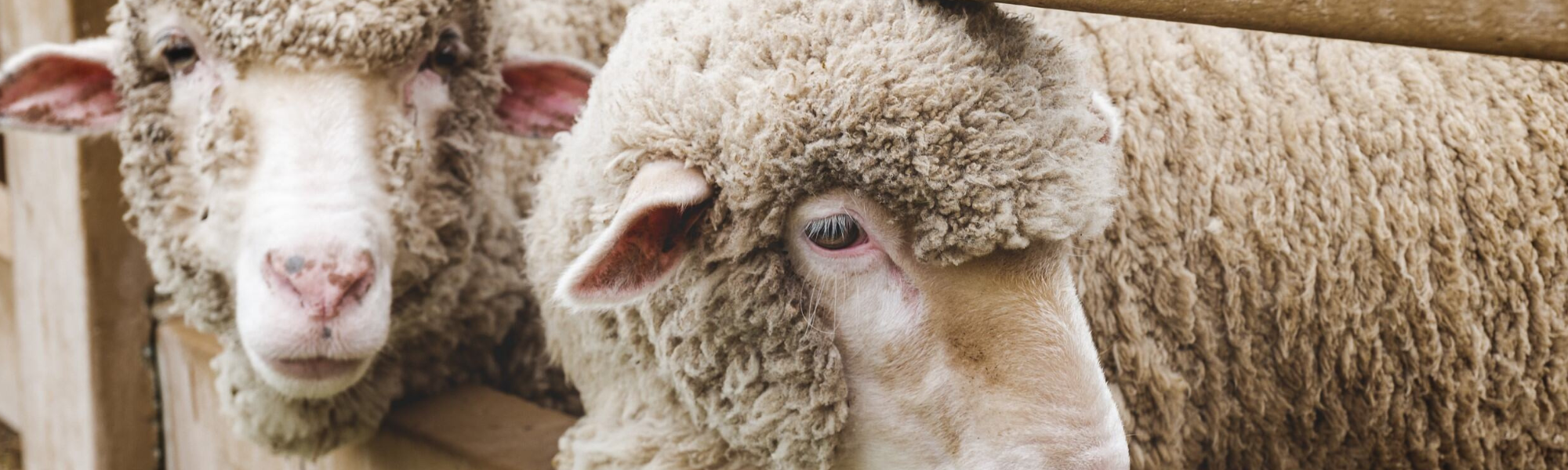
Sheep and goat producers and livestock agents across New South Wales can now access affordable eID equipment through a new rebate program from the NSW Government. From 2 March 2026, eligible producers and agents can claim a 50% rebate (up to $1,500) on handheld eID readers purchased on or after 3 October 2023.
This round targets those who missed the 2023 infrastructure rebate. Electronic identification (eID) tags help record individual animal data to support smarter breeding and selection decisions, delivering measurable returns.
NSW Fee-Free Agricultural Training Opportunities for 2026
RuralBiz Training is offering NSW Government-subsidised (fee-free) training for eligible farmers and rural residents. These courses are designed for people working in agriculture and cover key qualifications such as Certificate IV in Agriculture, Certificate IV in Agribusiness, Diploma of Agriculture and Diploma of Agribusiness Management. The training is flexible and self-paced so you can fit it around your farm commitments.
Whether you're looking to build your skills, improve business knowledge or explore new career pathways in agriculture, click below to find out more.
RFCS NSW on the road
Sheep containment area field day – Mangoplah
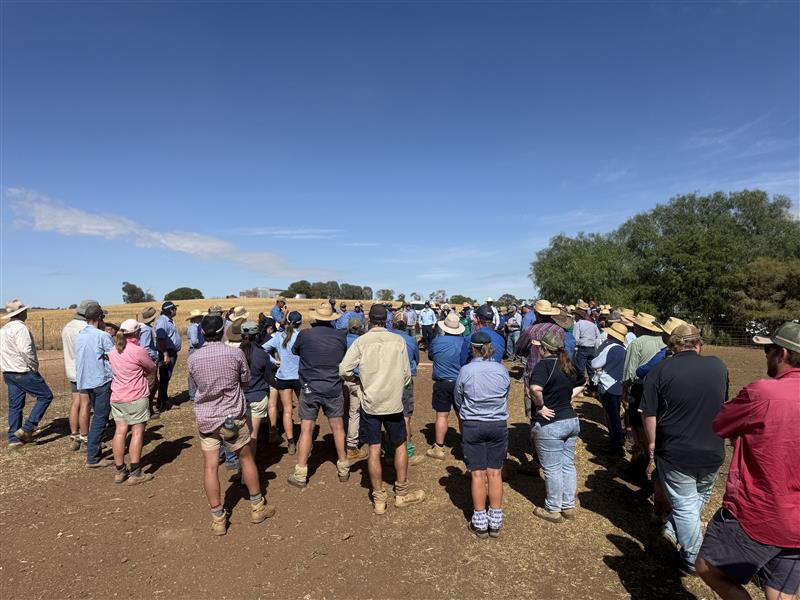
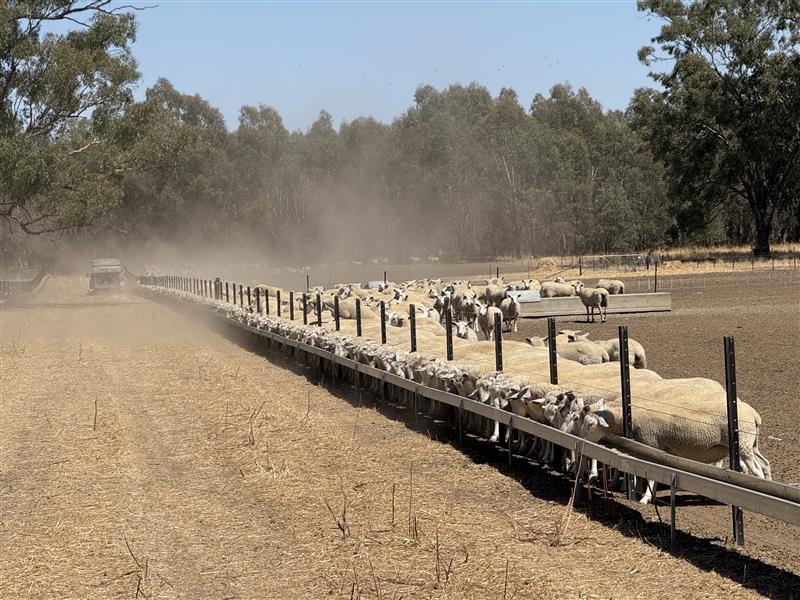
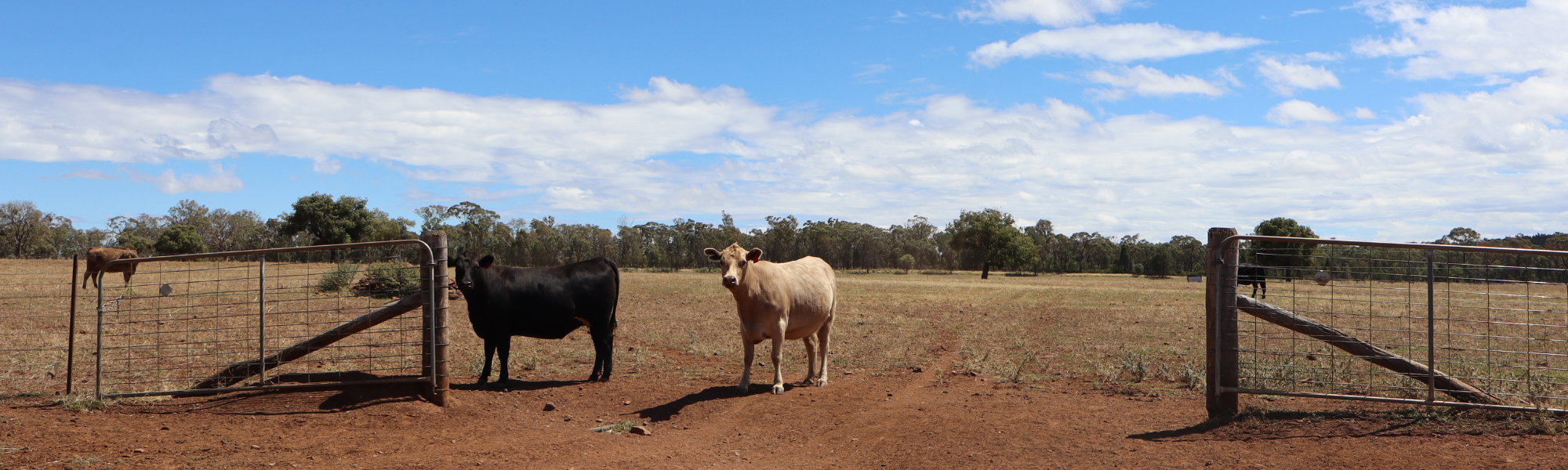
Rural Financial Counsellors Rhianna and Scott attended the Mangoplah AGnVet, Holbrook Landcare Network and Murray LLS Stock Containment Day. There was a great turnout of more than 150 local farmers and industry people. The day concentrated on the ideas and understanding of how stock containment for feeding can benefit stock and growers – helping to control seeding for either maintenance or growth gain, labour and time savings, low-cost vs more elaborate ways to make it work and tips to avoid. The day was well received and several producers commented on using the RAA drought funding that enabled them to help finance the established systems.
If you missed out, you can watch a video of the different containment areas below:
Stock Containment Areas – Cattle Stock Containment Areas – Sheep

Upcoming events
NSW Farmers Succession Planning Seminars
Planning for the future of your farm and family can be one of the most important and challenging choices you will ever face.
NSW Farmers, in partnership with Cater and Blumer and WFI, is hosting a series of Succession Planning Seminars across our service region.
These practical sessions will cover key topics including family conversations, legal structures, tax implications, transition planning and common challenges, with the opportunity to speak directly with the experts afterwards.
Places are limited and registrations are essential.
Hilston – Register here Dubbo – Register here Coonamble – Register here
Copyright Rural Financial Counselling Service Southern Region Limited
1800 319 458 | ABN: 57 649 413 936
256 Kincaid Street, Wagga Wagga, NSW, 2650
Facebook | LinkedIn | Website |